Best Month for Sailing in Crete: Sea, Wind and Light
Every other page on this site tells you what a trip is like. This one tells you when to take it. The season runs from about April to early November, and across those months the sea warms by nine degrees, sunset moves by more than three hours, and the wind goes from absent to the loudest thing in the forecast. Those three numbers, not the brochure, decide what a day on the water actually feels like.
We sell sailings from Heraklion and the eastern harbours all season, so the figures below are the ones we plan around. This page does not rank the trips — our ranked guide to sailing trips from Heraklion does that, and the full Crete sailing guide covers the formats. What it does is map conditions to choices, including the honest one: which of the trips on our list to avoid in a windy week.
Quick Summary
- The sailing season runs April to October, stretching into early November in a settled autumn. Outside it, these boats are not running.
- Sea temperature off the north coast averages roughly 16–17°C in April, 19°C in May, 22–23°C in June, 25°C in July, 25–26°C in August, 24–25°C in September and 22–23°C in October. The water is warmer in October than in June.
- Sunset at Heraklion falls from about 20:35 in mid-June and mid-July to 18:45 in mid-October, and the clocks going back on the last Sunday in October drop it to about 17:35 overnight.
- The meltemi is most persistent in July and August. On an ordinary day it builds through the late morning and eases towards evening, so a morning departure is usually the calmer one.
- June and September are the two months that get sea, wind and light roughly right at the same time.
- Sunset is a departure time, not a product. Nearly every Dia cruise sells a morning and an afternoon slot at the same fare, and the afternoon one — 15:00–21:00 on the €70 semi-private — is the one still on the water when the sun goes down.
Sea Temperature Month by Month
These are approximate long-run monthly averages for Heraklion and the north coast, rounded to the conservative end. Published climate tables disagree by up to 2°C for the same month depending on whether they use older baselines or recent satellite data, so read them as the shape of the season rather than a forecast for your date.
April, about 16–17°C. Cold enough that most guests want a quick dip rather than a swim. The month moves a lot inside itself, starting near 16°C and finishing closer to 18°C, so an early-April sailing and a late-April one are not the same water.
May, about 19°C. The turning point. Fine if you swim in the sea at home, bracing if you do not.
June, about 22–23°C. Properly warm, and this is where the swim stop stops being a test of character.
July, about 25°C, and August, about 25–26°C. The warmest water of the year. August is the warmest or joint-warmest month depending on the table — some make July, August and September a three-way tie.
September, about 24–25°C. Barely below August, and the figure most people get wrong. The sea holds its summer heat while the air cools and the crowds thin.
October, about 22–23°C. Warmer than June. Anyone who swims happily on a June trip will swim happily in October; the constraint is the shortening day, not the water.
November, about 20–21°C, easing through the month. By the time it is genuinely cold, the season has closed anyway.
One caveat worth stating: these are monthly means for the north coast, not the temperature on a given day. April readings alone range from about 15 to 19.5°C within the month.
Sunset Times Across the Season
Approximate mid-month sunset at Heraklion, accurate to within a minute or two in any year:
- Mid-April — about 19:55
- Mid-May — about 20:20
- Mid-June — about 20:35
- Mid-July — about 20:35
- Mid-August — about 20:10
- Mid-September — about 19:30
- Mid-October — about 18:45
- Mid-November — about 17:15
The latest sunsets of the year fall in late June at about 20:40, and it is a plateau rather than one evening — from mid-June to the first week of July the sun sets within a couple of minutes of that every night. The latest sunset is not the longest day: the solstice around 21 June gives the most daylight, about fourteen and a half hours, but the sun keeps setting fractionally later for another week.
Sunset shifts noticeably inside a single month, so use the nearest date rather than reading these as "the time the sun sets in October" — the first of that month is 19:05 and the last is 17:27. The sky stays comfortably light for about twenty-five minutes after the sun goes down, and these are flat-horizon times, so a boat anchored under a cliff loses direct sun a good while earlier.
The largest single change of the season comes on the last Sunday in October, when the clocks go back and sunset falls from about 18:35 on the Saturday to about 17:35 on the Sunday. Chania sees the sun set about five minutes later than Heraklion, Agios Nikolaos two to three minutes earlier. For how that changes the judgement on an evening sailing, our sunset sailing guide takes the booking side of the question.
The Meltemi and What It Does to a Crossing
The meltemi is the northerly wind of the Aegean summer. It blows from roughly June to September, occasionally from mid-May into October, and it is at its most persistent in July and August. On our coast it arrives from the north to north-west, most often the north-west, and Crete lies with its long axis square across that flow with open water and nothing to break it between Heraklion and the Cyclades.
There are two kinds of meltemi day, and the difference matters more than any number. A moderate meltemi follows the sun: light in the morning, building through the late morning, peaking in the early to mid afternoon and easing towards evening. That is the everyday pattern, and it is the single most useful thing to know when you pick a departure. A real blow ignores it — a strong northerly episode can run day and night without the overnight drop, for anything from three days to a week, and those are the spells that cancel trips.
For strength, crews and pilot books put a typical meltemi at force 4 to 5, often force 5 to 7 in the stronger spells and force 7 to 8 at the peak of a serious one. Treat those as what sailors report rather than a measured climatology.
We are not going to tell you what percentage of departures it cancels, because nobody publishes a reliable figure for that and we would rather say so than invent one. What we can say is the shape: worst in July and August, several days at a time and then a release.
The other half of the story is swell. The island's mountains slow the wind for some distance upwind of the coast, so it is often lighter close inshore than out in the open Cretan Sea — but the northerly sea rolls in unimpeded. On most cancelled days it is the sea state as much as the wind speed that makes the decision, which is why a modest forecast can still mean a rough crossing.
Sheltered Water and Exposed Water
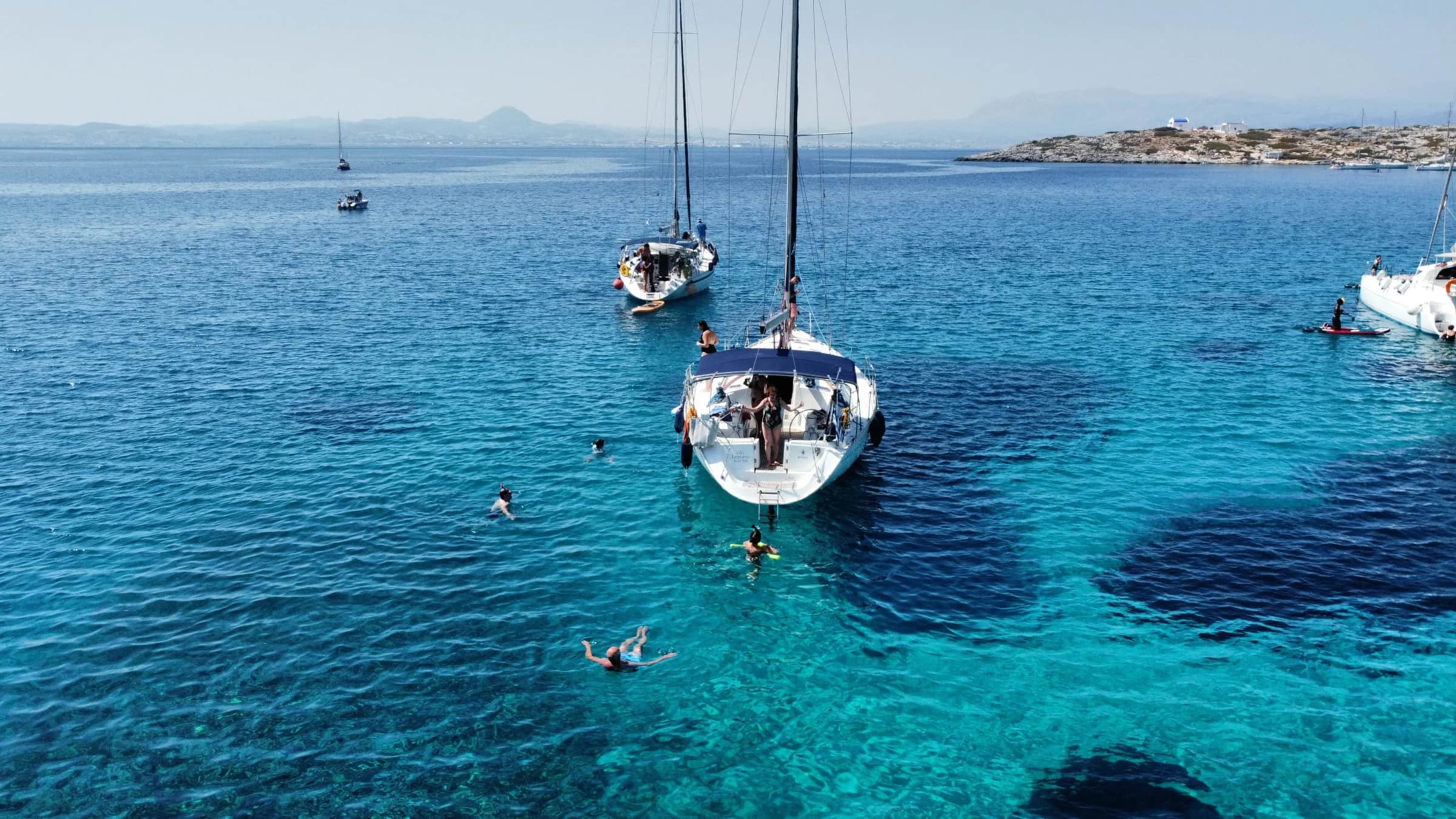
The two ends of Crete are the windy ends. The far north-west around Gramvousa and Balos, and the capes at the eastern end, take the strongest northerlies; the middle of the north coast, Heraklion included, sits in the more sheltered stretch.
That shapes what we would put you on in a blowy week. The semi-private catamaran from Agios Nikolaos at €140 works the inner western side of the Gulf of Mirabello, and the Elounda and Spinalonga lagoon behind the peninsula is superbly sheltered from a north-westerly. Be clear about the limits, though: the outer gulf and the cape immediately north of the town are not sheltered, and strong summer northerlies are a known feature there. The gulf stays sailable in a meltemi, which is not the same as calm water throughout — our Spinalonga catamaran guide covers that route properly.
At the other end of the scale, the shared catamaran to Balos and Gramvousa at €220 is the most exposed trip we list. Operators out there do post cancellations in strong wind. The exposure is the passage round the cape and the open crossing rather than the destination — the anchorage in the lee of Imeri Gramvousa is well sheltered once you arrive. If your one free day falls in a northerly, this is the trip to move rather than gamble on.
Sailings you can book
- Shared Catamaran Cruise from Heraklion to Dia Island with Drinks and MealHeraklion, Crete · 6 hours€90
- Semi Private Sailing Trip from Heraklion to Dia Island: All-InclusiveHeraklion, Crete · 4 hours€98
- 4.5 hours Private Sailing Trip from Heraklion to Dia Island: All-InclusiveHeraklion, Crete · 5 hours€540
Morning or Evening in a Windy Week
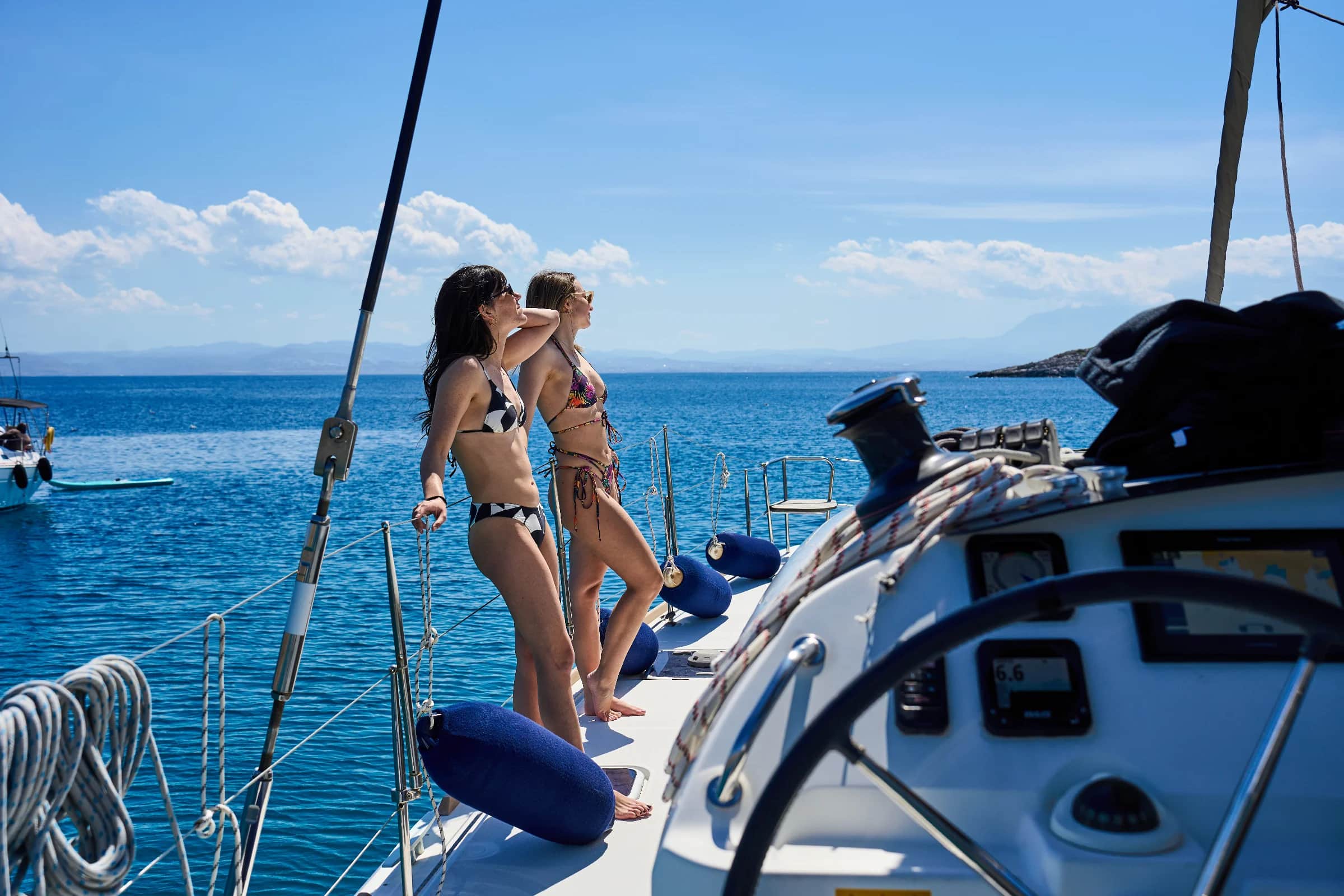
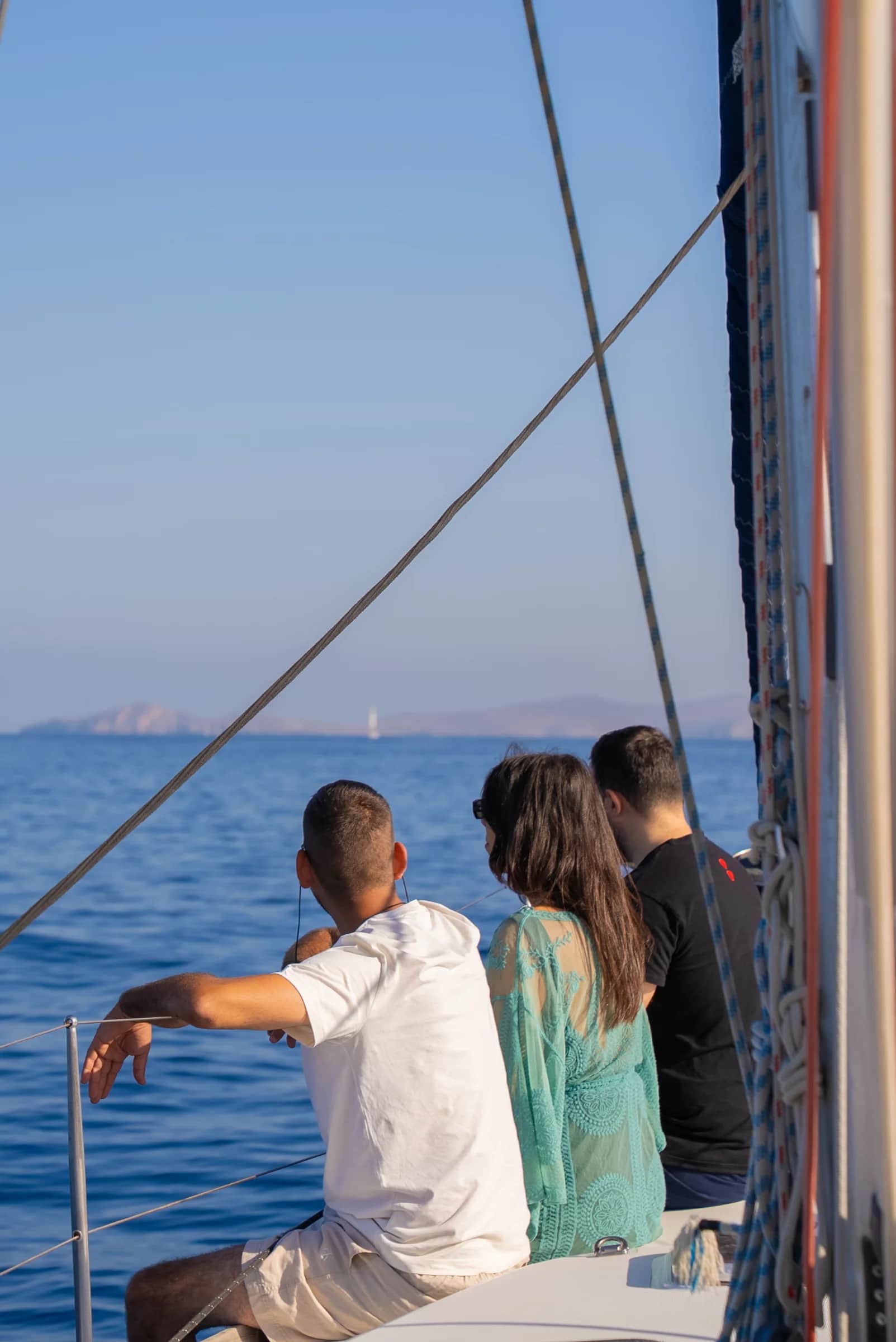
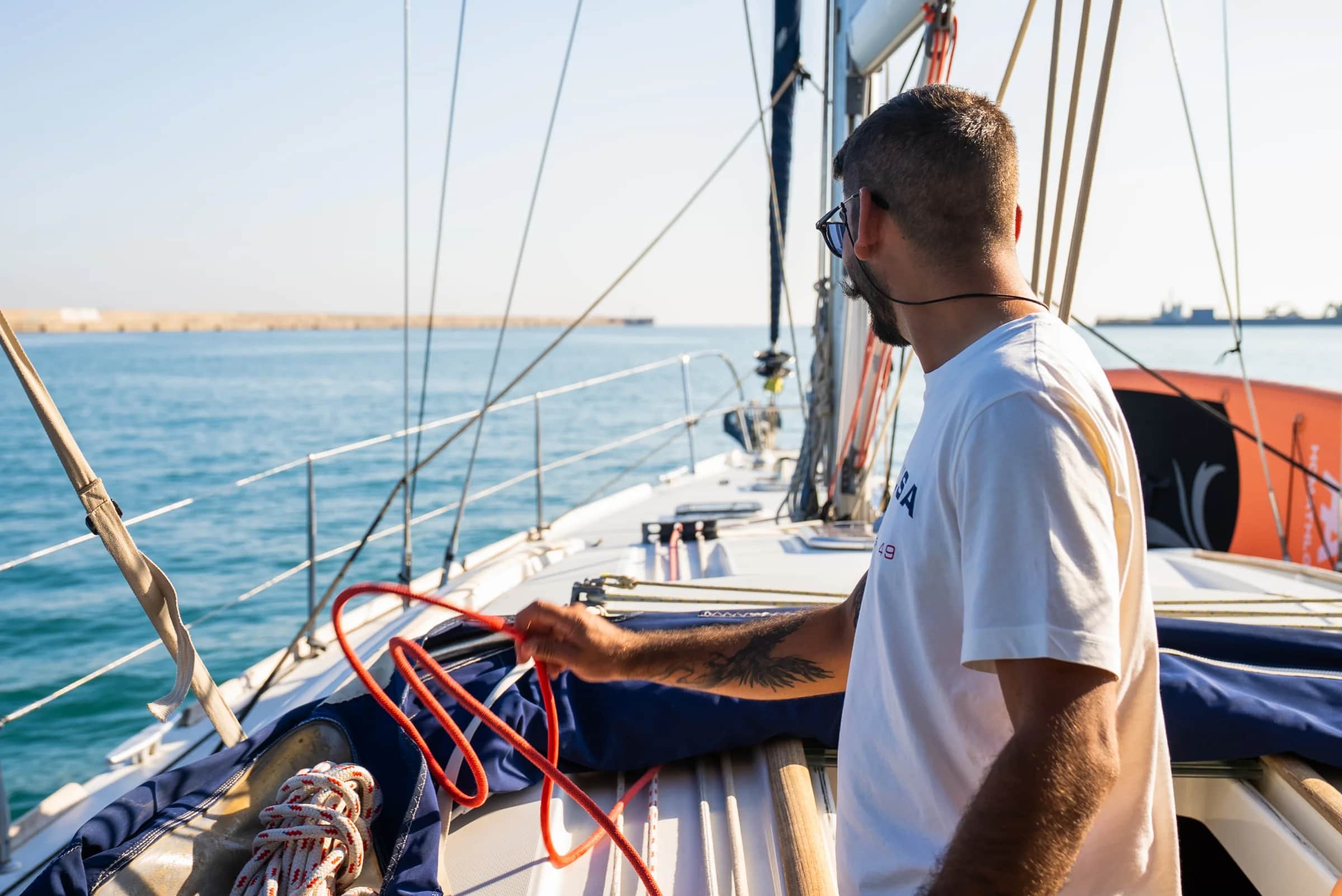
On a settled day the slot barely matters. In a windy week it is the most important choice you make, and the reason is the daily rhythm above rather than anything about the boats.
A morning departure is the calmer one, because the moderate meltemi has not built yet. If anyone aboard is prone to seasickness, if you are bringing small children, or if snorkelling is the point of the day and you want clear water, take the morning. The afternoon slot sails out into the strongest part of the day's wind — but it is a six-hour trip, so it also comes back down the other side of it, on settling water and in the best light of the day. That is the real trade: a livelier outbound leg in exchange for a far better return.
One thing worth saying plainly, because the listings bury it. Sunset sailing from Heraklion is booked as a departure time, not as a different trip. The same boats sell two starts a day at the same fare: the €70 all-inclusive semi-private runs 09:00–15:00 or 15:00–21:00, the €90 shared catamaran the same hours, the €65 active sail 10:00–15:00 or 16:00–21:00, and the €98 semi-private 09:00–15:00 or 15:30–21:00. Pick the later one and you are at anchor when the sun goes down, for the same money. No boat in our list has a standing start after 16:00; a 17:00 Balos slot has appeared on the calendar only as a single one-off date, so never plan an evening around it. Not every private is out at sunset either: the €980 full-day private runs 09:30–16:00 and is back on the pontoon while the light is still high, the €900 QUIET private keeps the same hours on its standing dates, and the €540 private's afternoon slot is back at 19:15, before sunset all summer. The format itself is explained in our guide to semi-private cruises.
June or September
For most people the real question is not which of seven months but which of two, and they are close enough that it comes down to what you want from the day.
June wins on light. Sunset around 20:35 means an evening sailing genuinely feels like an evening — you board in full sun and come home in a long golden hour. September's 19:30 is more than an hour earlier, and earlier still by the end of the month.
September wins on water and calm. The sea is a degree or two warmer, the meltemi is easing off its peak, and the odds of a flat crossing to Dia are better. It is the month we would suggest to a nervous sailor.
If the swimming and the calm matter most, take September. If the evening does, take June.
When a Sailing Is Called Off
Sooner or later a summer departure gets cancelled for weather. Operators reschedule or refund, which is easy if you have a week on the island and awkward if you booked the boat for your last afternoon — so the most useful piece of planning advice here is not about months at all: put the sailing in the first half of the trip and keep a spare day behind it.
Be realistic about what a cancellation means, too. A crew that calls off a sailing in a force 6 is doing its job, and a changed route or a shorter swim stop is what a working skipper does with the sea in front of them, not a downgrade. Check the cancellation terms before you pay rather than after.
Common Mistakes to Avoid
The first is assuming early summer has the warmest water. It does not — October is warmer than June, and September is barely below August.
The second is booking an afternoon departure in a windy July week when the same boat runs in the morning.
The third is treating a sunset time as fixed. An evening sailing in mid-July and one in mid-October are more than an hour and a half apart, and after the clocks change they are nearly three hours apart.
The fourth is hunting for a listing called a sunset cruise. The sunset trip is the afternoon departure of an ordinary Dia cruise — you choose it from the start-time dropdown, at the same price as the morning.
The fifth is putting the boat on the last day, which turns an ordinary weather cancellation into a lost experience rather than a rescheduled one.
Where to Stay
Staying near a departure port removes the one bit of friction a sailing day has, which is reaching the harbour on time in August traffic. Heraklion and the coast either side of it puts you within twenty minutes of the widest choice of departures; Agios Nikolaos suits anyone planning around the sheltered eastern water.
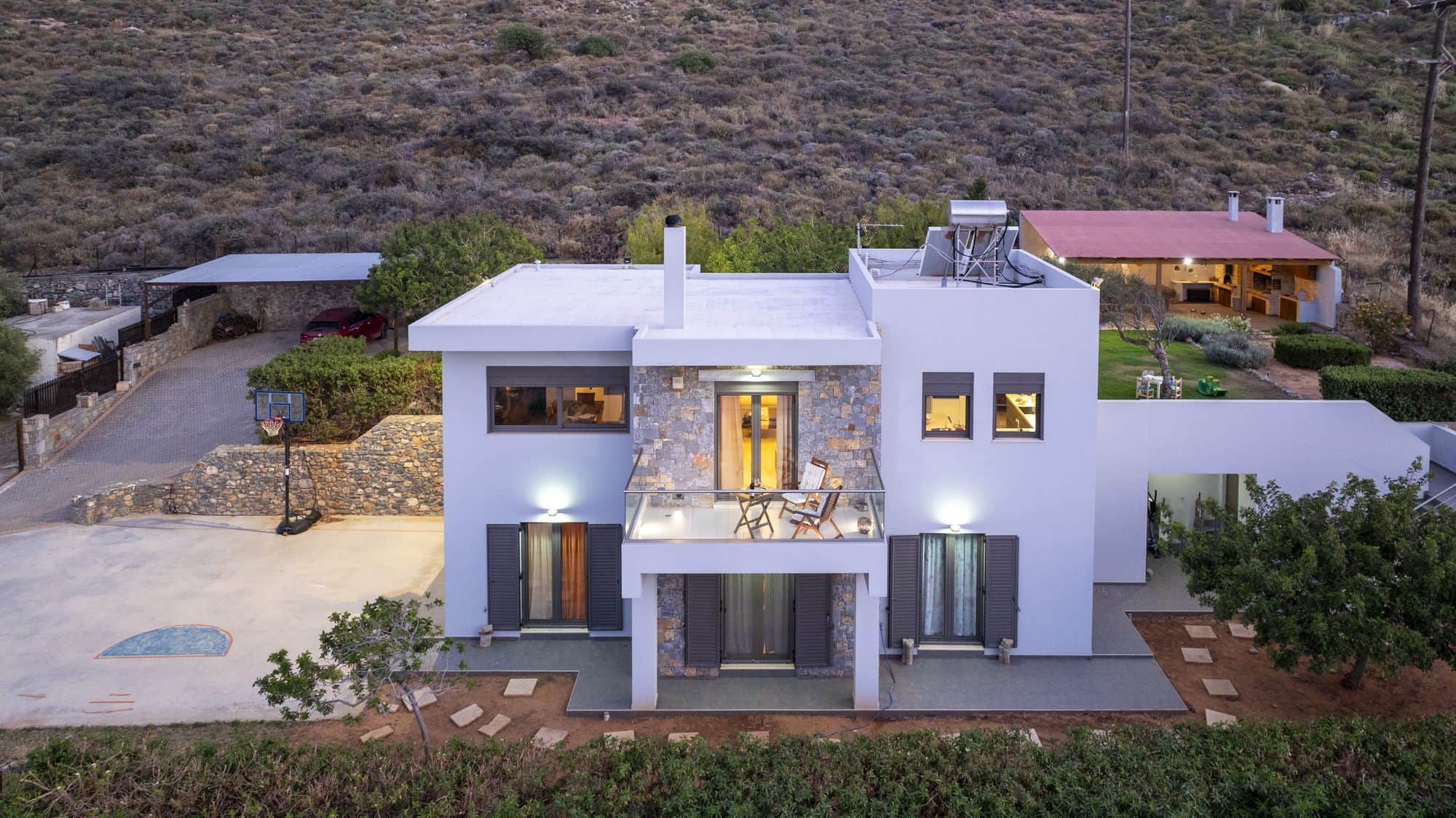
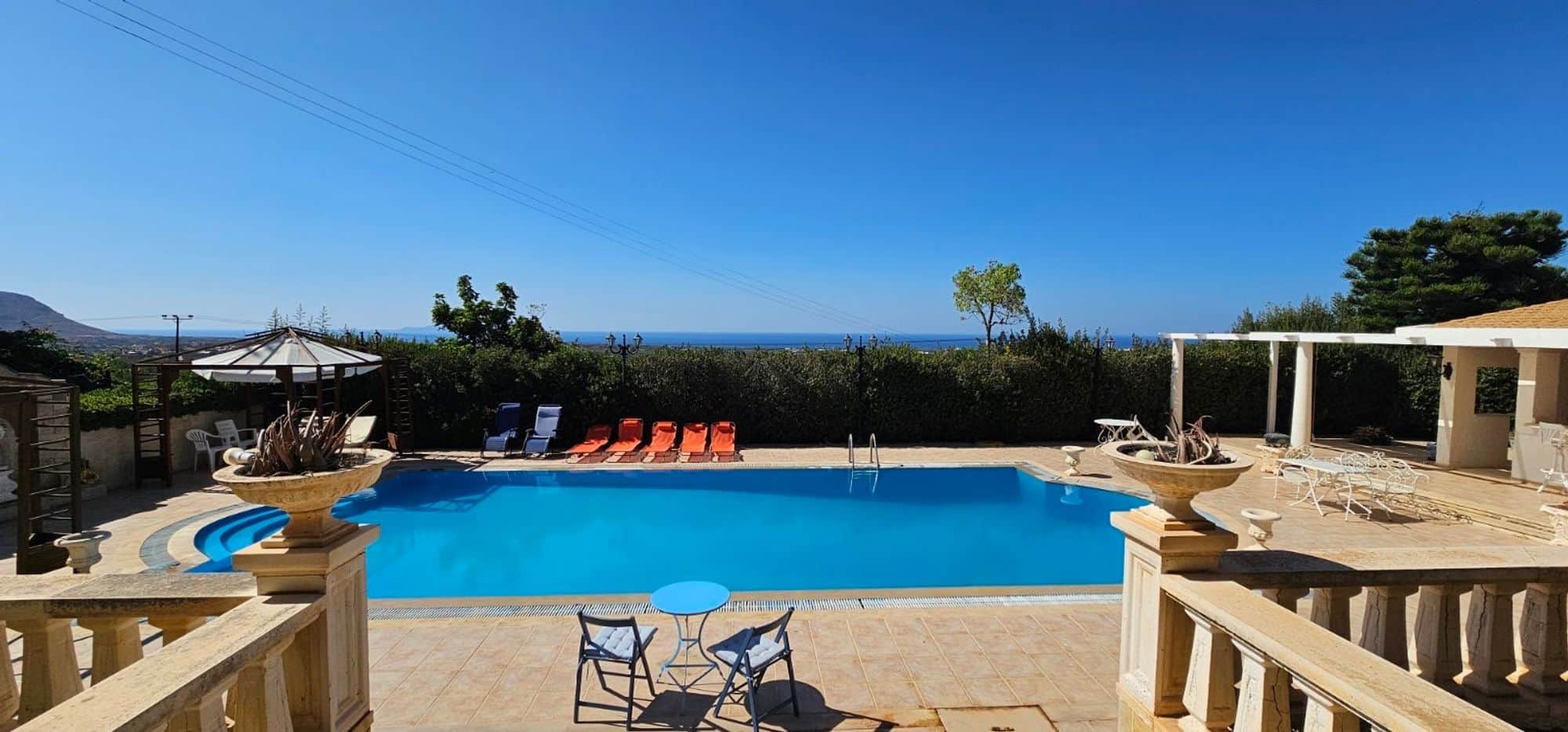
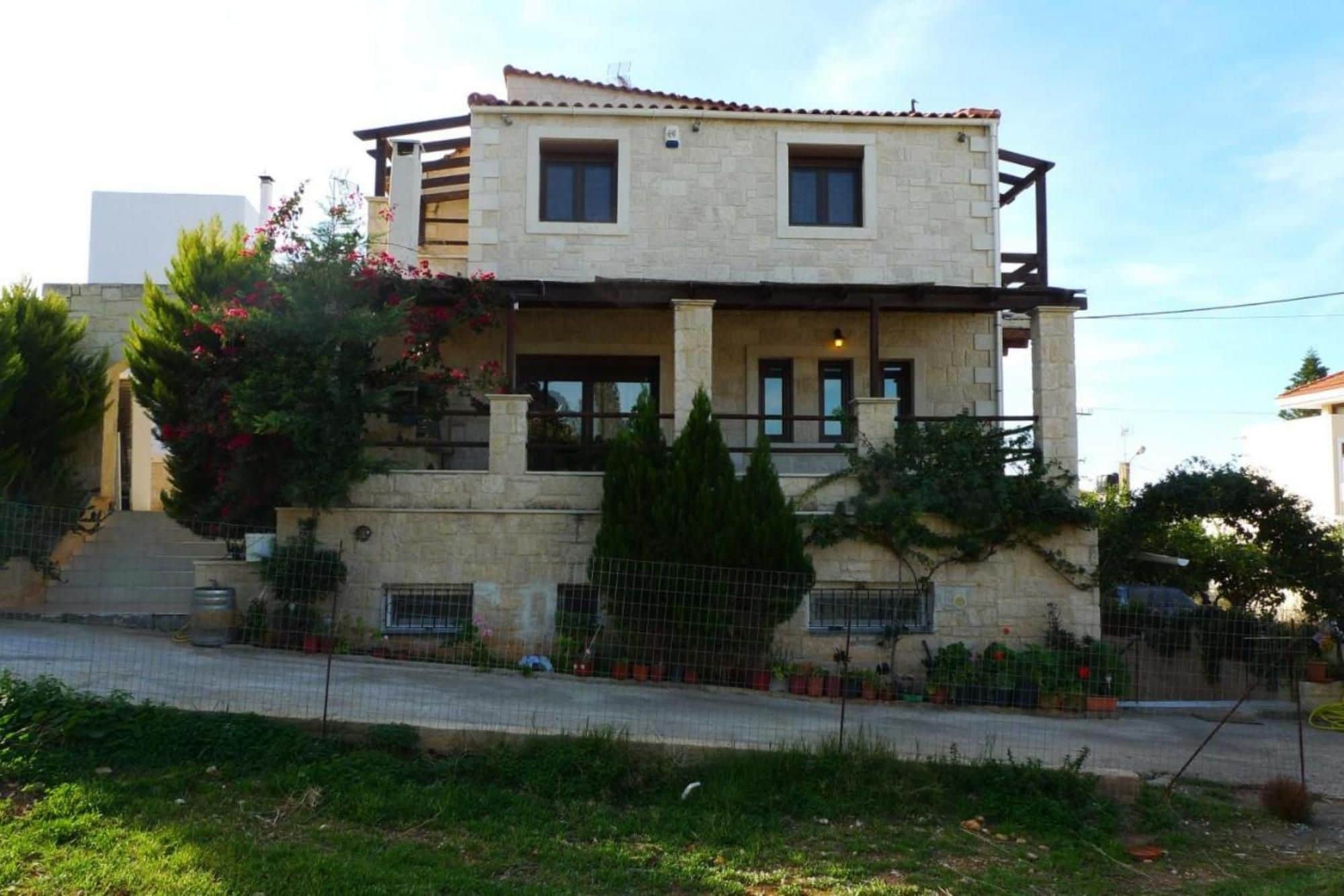
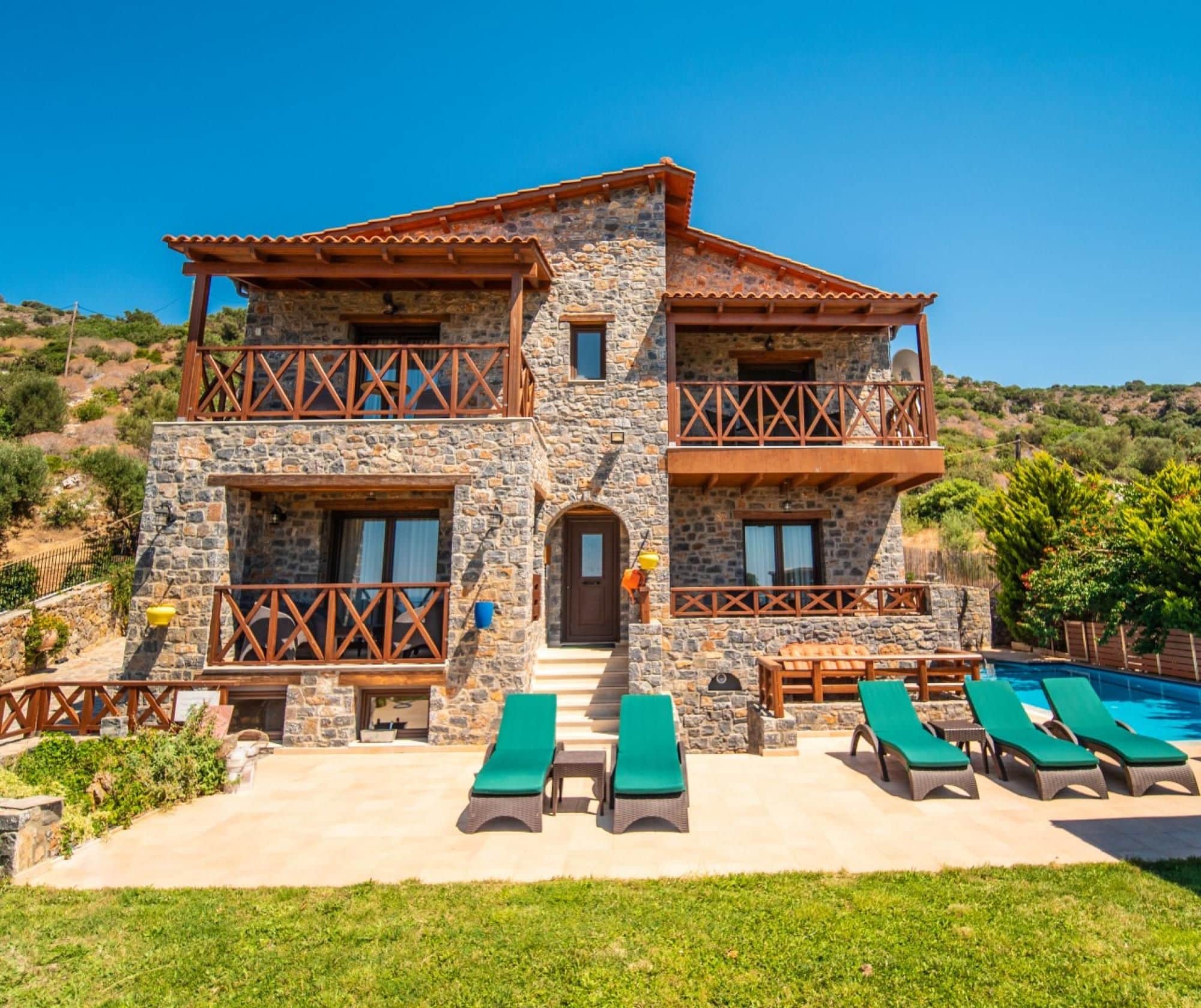
We run our own villa company, My Creta Villa, so for a family or a group we can put you in a house near the coast rather than in two hotel rooms — which matters more than it sounds on a boat-heavy holiday, when you need somewhere to hang wet towels and a kitchen for the early breakfast before a morning departure.
Villas near the Heraklion departures
My Creta Villa — our own villa company
Best month for sailing in Crete: frequently asked questions
What is the best month for sailing in Crete?
June or September. June gives the longest evenings and settled conditions; September gives slightly warmer water, calmer seas and fewer people. If the swim is the point, take September. If the evening light is, take June.
How warm is the sea in Crete by month?
Off the north coast it averages roughly 16–17°C in April, 19°C in May, 22–23°C in June, about 25°C in July, 25–26°C in August, 24–25°C in September, 22–23°C in October and 20–21°C in November. The sea is warmer in October than in June.
What is the meltemi and will it cancel my trip?
It is the northerly wind of the Aegean summer, most persistent in July and August. On an ordinary day it builds through the late morning and eases towards evening, so a morning departure is the calmer one. Strong episodes run day and night for three days to a week and do cancel sailings.
What time does the sun set in Crete?
At Heraklion, roughly 19:55 in mid-April, 20:20 in mid-May, 20:35 in mid-June and mid-July, 20:10 in mid-August, 19:30 in mid-September, 18:45 in mid-October and 17:15 in mid-November. The latest sunsets are in late June at about 20:40.
How do I book a sailing that is out for the sunset?
Choose the afternoon start on a normal Dia cruise. The €70 all-inclusive semi-private runs 09:00–15:00 or 15:00–21:00 and the €65 active sail 10:00–15:00 or 16:00–21:00, both at one price, so the later slot is on the water for a sunset that falls between 18:45 in mid-October and 20:40 in late June. Some privates are exceptions: the €980 full-day private returns at 16:00, the €900 QUIET private does too on its standing dates, and the €540 private's afternoon slot is back at 19:15, before sunset all summer.
Is October too late to sail in Crete?
No. The sea sits at 22–23°C, warmer than June, and the season runs into early November. The real constraints are the shorter day once the clocks go back on the last Sunday in October, and a higher chance of an unsettled spell.
Which sailing holds up best when it is windy?
The semi-private catamaran from Agios Nikolaos at €140, which works the sheltered inner side of the Gulf of Mirabello. The shared catamaran to Balos and Gramvousa at €220 is the most exposed trip we list and the first to be cancelled.
Final Thoughts
Picking a month for sailing in Crete is really picking which compromise you want. No week has August's water, June's evenings, September's calm and April's empty decks at once. Once you have the numbers, though, it becomes a decision rather than a gamble.
Three things are worth carrying away. The sea is warmer in autumn than in early summer. The morning is the calmer half of a summer day. And the sailing should not be on your last day in Crete — which is the one that saves the holiday when the wind arrives anyway.
See all sailing trips in Crete